Services
The Manor of Tuddenham St Mary
Information about the manor of Tuddenham St Mary

The Manor of Tuddenham St. Mary
An Historical Perspective:
The Manors of England, in common with many of our country’s other institutions, are of ancient origin and have changed significantly over the centuries to reflect changes in society.
A brief overview:
The Lord of the Manor originally owned most of the land in the Manor; he reserved some for his own use and granted tenure for the remainder in return for work on his land for a specified number of days annually: this was in time commuted to a payment rather than labour. The land owned by the Manorial Lords tended to diminish over time; this reflected changes in individual Lords’ circumstances and also the extension of land ownership due to legal reforms and wider prosperity. The obligation of Manorial Lords and higher nobility to provide men for military service ended as threats to public order internally diminished and a standing army was established to counter external threats. The Manorial Lords also had a significant judicial role through Manorial courts that deal with a wide range of civil and criminal matters. That role gradually ended as a national judicial system, particularly the creation of Justices of the Peace, developed.
Origins of the Manorial system:
These can be traced back at least 1,000 years to the Anglo-Saxon period. At that time Manors in Danelaw (that part of northern and eastern England that had been invaded and settled by the Vikings) usually consisted of several villages whereas in Anglo-Saxon areas it was based mainly on a single village; this meant that in the latter there was a more direct connection between the Lord of the Manor and the local community. The Tuddenham area at this time had two Manors; one Manor of 68 acres was held by Godhere (a freeman of St. Etheldreda’s) and the other Manor of 12 acres was held by another freeman, Gerald, under patronage derived from the Bishop of Ely. There were also 20 acres belonging to Tuddenham Church
Results of the Norman Conquest:
When Duke William of Normandy conquered England in 1066 he asserted the right to dispose of the land he had conquered by granting land formerly owned by Anglo-Saxons to the Norman nobility who had supported him. These nobles in turn granted land to their supporters, thus creating a pyramid structure of land tenure based upon mutual obligations (such as rent, military or other services). In Tuddenham Godhere lost his Manor of 68 acres and was replaced by a Norman, Roger of Poitou. Two other Normans held land in Tuddenham; Robert Malet (Sheriff of Suffolk 1066-86) held 12 acres and Roger de Rames held another 12 acres. This time of forced major upheaval in Tuddenham must have caused considerable resentment.
Later history;
The Manor of Tuddenham in the period after the Norman Conquest to the present day follows a familiar Manorial pattern of succession by family inheritance alternating with conveyance by sale to others. For example, in 1316 Tuddenham was vested in Sir Edmund de Hemegrave (High Sheriff for Norfolk & Suffolk and Governor of Norwich Castle); the Manor was inherited by his son in 1334 and by his grandson in 1349.
The grandson then conveyed the Manor out of the family.
 The Hervey family were Lords of the Manor of Tuddenham for nearly three hundred years (1698-1988). The Lordship came into the possession of John, Baron Hervey of Ickworth, in 1698. John was created 1st Earl of Bristol in 1714 for his zealous support of the succession of the House of Hanover to the Throne. The title was advanced to Marquess at the time of the 5th Earl in 1826. The various Earls and Marquesses of Bristol have had a distinguished record of public service in many high offices including in the Royal Household, the Royal Navy, the Diplomatic Service and politics (where there was a longstanding family tradition of serving as Member of Parliament for Bury St. Edmunds).
The Hervey’s public service even included the ecclesiastical, with the 4th Earl being known as the “Earl-Bishop” because he served as a Bishop in the Church of Ireland. Although an efficient clergyman, he had a reputation for high living (to the extent that hostelries in various countries were called “Hotel Bristol” to indicate they were the best in town);
To the present day:
The 6th Marquess (Victor Frederick Cochrane Hervey) moved to Monte Carlo as a tax exile in 1979 and died there in 1985. He was succeeded as 7th Marquess by his son (Frederick William John Augustus Hervey) who sold the Lordship by conveyance in 1987, and thus ended the Hervey family’s remarkable 290 year connection with Tuddenham.
Since then the Lordship of Tuddenham has passed by conveyance successively to
Bruce Coward Esq. (1988-97),
Craig Sadler Esq. (1997-2007) and
Owen James Wilson Esq. (since 2007).
The Lordship:
The current Lord of the Manor, Mr Owen Wilson, writes:-
I became Lord of the Manor of Tuddenham St. Mary on 4th September, 2007.
I believe that with the honour of holding this ancient title goes the obligation to make a positive contribution to the community.
Keeping up-to-date:
To make a positive contribution means keeping up-to-date with what is happening in the village.
The ways in which I try to do this include:-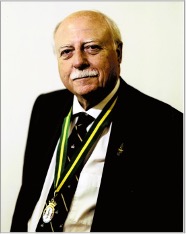
- accessing the Parish Council’s agendas, minutes and other publications online;
- regular communication with the Manorial Steward (Esme Murfitt);
- reading “Umbrella” magazine;
- reading the Kennet Valley & South Brecks Churches News Sheet, and contacts made over the years with local individuals and organisations.
Tuddenham St. Mary Manorial Fund:
I established the Fund in 2008 to provide financial assistance to worthwhile projects benefitting residents of Tuddenham St. Mary, and as a practical way of demonstrating my support for the village. Since inauguration the Fund has made donations totalling £10,272 through grants ranging from £100 to £1,872.
The organisations and projects supported have included:-
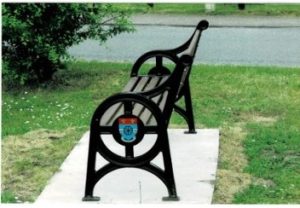
- Tuddenham St. Mary Parish Council = 2 public seats for the Village Green (2011) and play area refurbishment (2020)
- Tuddenham Playing Field Management Association = replacement of Pavilion windows (2016)
- Tuddenham Interest Groups Committee = “Umbrella” magazine costs (2017 &
- 2018)
- Tuddenham Village Hall Committee = new Village Hall project (2021)
- Tuddenham St. Mary Bowls Club – purchase of new mower (2025)
- Tuddenham Cricket Club – new fixed net facility (2025)
The Friends of Tuddenham St. Mary’s Church:
I recognise that Tuddenham St. Mary’s Church building is a most significant part of the village physical environment. I also appreciate that the ancient habitat of the surrounding burial ground plays an increasing role in the local ecology as a result of sensitive management. Additionally the Church is a welcoming space to celebrate and explore the Christian faith; it is a unique repository of history and remembrance; it provides a special environment for events and community activities. The ‘Friends undertake the vital role of fundraising to maintain the Church and provide facilities to widen use of the building.
I support this work by being a Member of the ‘Friends and also making grants from the Memorial Fund; these have contributed to:-
- repair of Churchyard boundary wall (2013)
- replacement of Churchyard boundary gates (2015)
- new soft furnishings for the Church (2018)
- renovation of old flint boundary wall (2022)
The Manorial Society of Great Britain:
The Society was founded in 1906 and has a membership of about 1,900 (consisting of Lords of the Manor, Feudal Barons, Peers and historians).
The Society’s aims include promotion of:-
- the study of English history and traditions;
- the preservation of manorial records, and
- awareness of Manorial Lords’ responsibilities in the local community
As a Member I receive information about what other Members are doing to preserve/revive local celebrations/customs/traditions and also the wide variety of initiatives they undertake to enhance community life in their areas; this is helpful to my role in Tuddenham.
Advice and information – during my 40 year career in Local Government I served with Borough, District and Town Councils in the Essex – Hertfordshire border area.
I have also been involved with many Registered Charities and other voluntary organisations serving as a volunteer, Board member and in other offices.
My professional and voluntary roles have enabled me to establish a wide range of contacts and sources of information: these have enabled me to respond positively to requests for advice/information which I receive from Tuddenham residents and organisations from time to time.
Today (and tomorrow) – Tuddenham has had Lords of the Manor for a thousand years and the office therefore provides the continuity of a living connection with the village’s history. I believe that history, tradition and community are important to the wellbeing of society; being Lord of the Manor has given me the opportunity of contributing towards all three in Tuddenham – which I intend to continue in the future, as opportunities and resources allow.
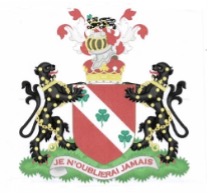
The Manorial Shield
The Manorial Shield provides a colourful means of identifying the Manor (on documents, property, etc.). It was designed by the current Lord of the Manor, Owen Wilson, with technical and copyright advice from professional graphic artist Eleanor Tanner of Eleanor Tanner Design.
Explanation
The watermill wheel – in the centre of the Shield represents Tuddenham Mill, a significant part of the local economy for many years and which continues as an important feature of Tuddenham Mill Hotel and restaurant.
The watermill wheel is also emblematic of local economic activity generally.
Dark blue wavy line on a white background – represents the River Lark, which powers the watermill wheel and is an important geographical feature of Tuddenham.
Light blue background – this is the predominant colour in the Suffolk County flag.
Two golden fleurs de lys on a red background – represents the town of Great Dunmow in north-west Essex, with which the current Lord of the Manor’s family have longstanding connections.
Motto – “Honour by Defiance” – refers to honours bestowed on various Lords of the Manor for defying the enemies of the state and constitutional government
(e.g. John, Baron Hervey of Ickworth, being created 1st Earl of Bristol in 1714 by King George I for his zealous support of the House of Hanover’s succession to the Throne).
This photograph is of one of two seats on the Village Green financed by the Tuddenham St. Mary Manorial Fund and which include a reproduction of the Manorial Shield.
CONGRATULATIONS TO ESME!
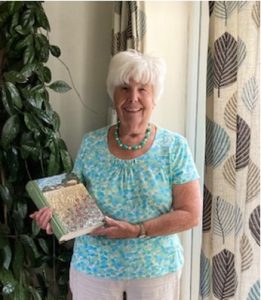
Congratulations to village stalwart Esme Murfitt on completing 15 years as Manorial Steward of Tuddenham St. Mary. Rachel Brittain presented Esme with the Folio Society fine art edition of “Lark Rise to Candleford by Flora Thompson” on behalf of the Lord of the Manor to mark the anniversary.
“Esme with the volume”
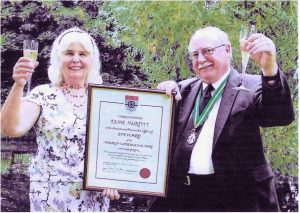
The ancient office of Steward was revived, after a lapse of over a century, by the current Lord of the Manor, Owen Wilson, on 24th August, 2009, during a colourful ceremony held at Tuddenham Mill. The current duties of Steward are mainly to provide a resident official representative of the Lord of the Manor who can communicate his views when appropriate and also keep him informed about activities and issues in the village.
This role increased in significance when Mr. Wilson retired from being Town Clerk of Great Dunmow in north west Essex and moved to Co. Fermanagh, Northern Ireland (where he has family connections).
Mr. Wilson commented:
My appointment of Esme Murfitt, a well respected local resident and historian actively involved in many aspects of Tuddenham life, as Steward has proved to be an excellent choice. She is always most helpful, including in providing background information for the Manorial Fund.
Esme being presented, with her Scroll of Office in 2009 by Lord of the Manor Owen Wilson.